How to Read a Stock Quote: Every Number Explained
A stock quote packs a lot into one line. Learn what the ticker, last price, bid and ask, spread, volume, market cap and P/E ratio tell you before you place a trade.
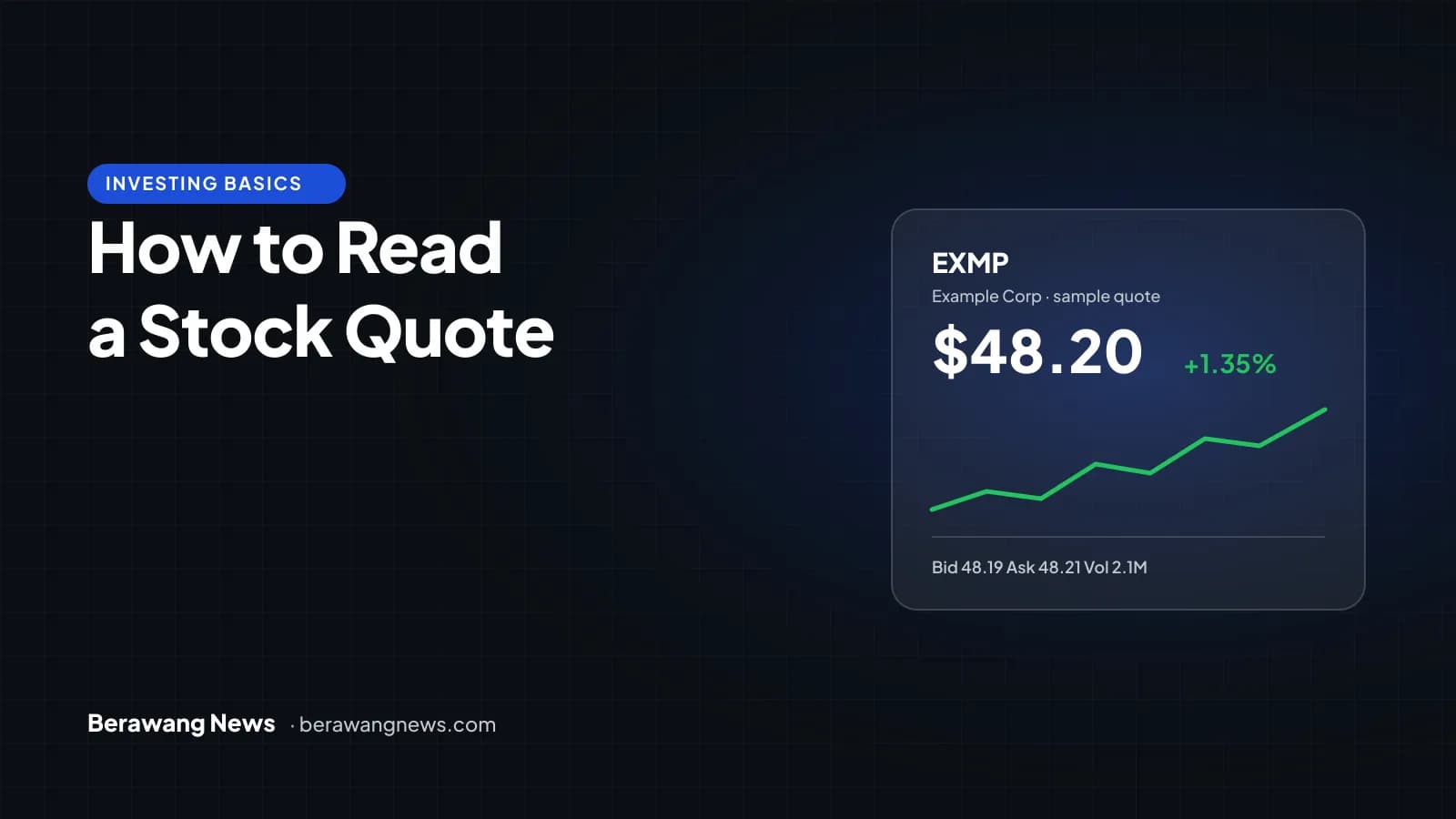
A stock quote is a snapshot of how a stock is trading right now. Every finance site and brokerage app lays it out a little differently, but the core numbers are the same. Here is what each one means, using a made-up company, Example Corp (EXMP), so the numbers are for illustration only.
The parts of a stock quote
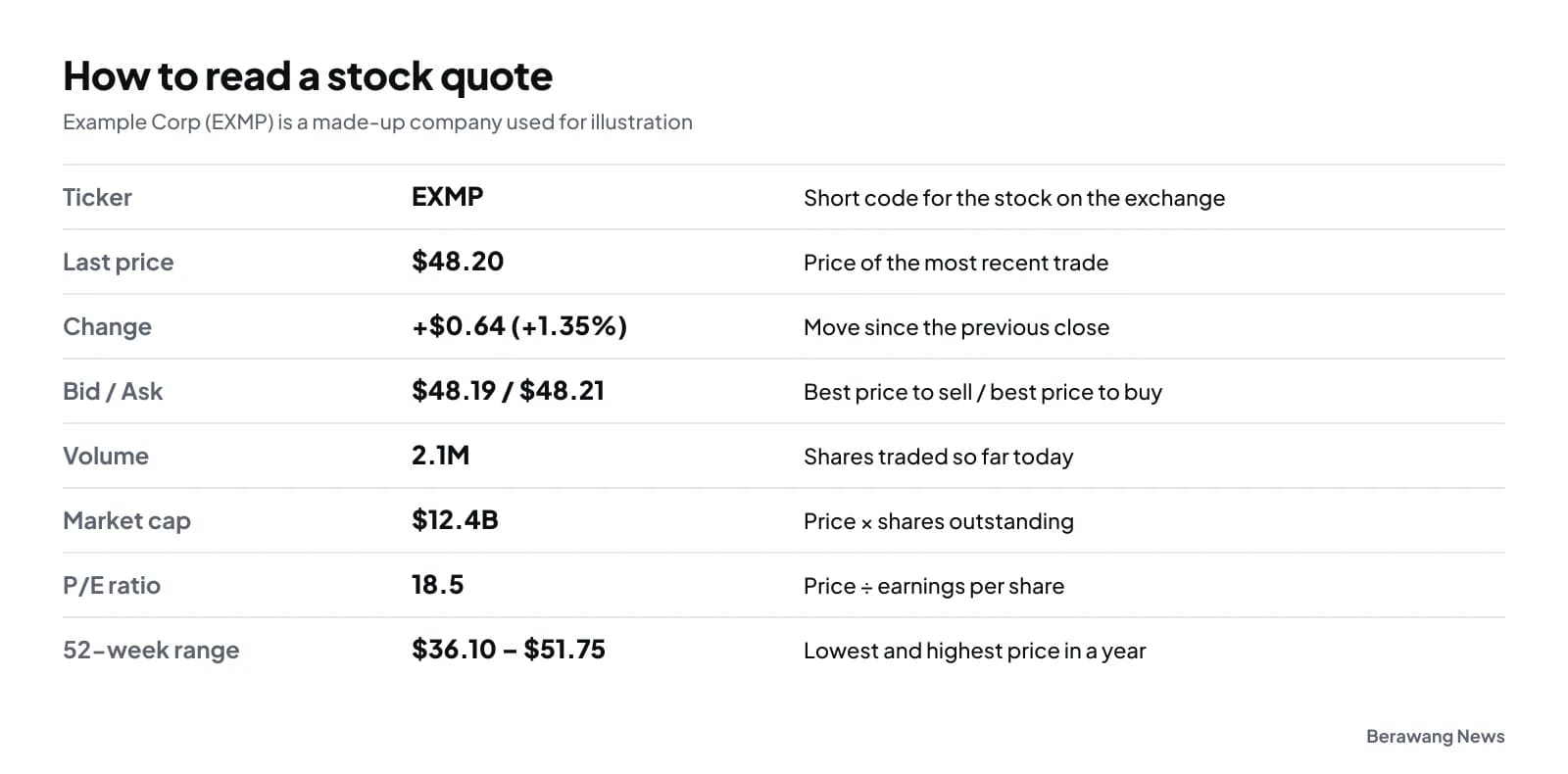
Item | Example | What it means |
|---|---|---|
Ticker | EXMP | The stock’s short code on the exchange |
Last price | $48.20 | The price of the most recent trade |
Change | +$0.64 (+1.35%) | How far the price has moved since the previous close |
Bid / Ask | $48.19 / $48.21 | The best price buyers will pay / sellers will accept |
Volume | 2.1M | Shares traded so far today |
Market cap | $12.4B | Share price × shares outstanding |
P/E ratio | 18.5 | Share price ÷ earnings per share |
52-week range | $36.10 – $51.75 | The lowest and highest prices over the past year |
Ticker symbol
Every U.S. publicly traded common stock has a short abbreviation, its ticker. Some are a single letter; others have up to five. Investor.gov notes that a “Q” added to the end of a ticker signals that the company is in bankruptcy.
Last price and change
The last price is where the most recent trade happened. The change shows the move in dollars and percent since the previous trading day’s close. Keep in mind that, as Investor.gov warns, the last-traded price is not necessarily the price you will get on your own order.
Bid, ask and the spread
- Bid: the highest price a buyer is willing to pay right now.
- Ask: the lowest price a seller is willing to accept.
- Spread: the difference between the two. In our example it is 2 cents.
When you buy with a market order, you generally pay near the ask; when you sell, you generally receive near the bid. A narrow spread usually means a stock trades often. A wide spread is a hidden cost each time you trade.
Volume
Volume is the number of shares that changed hands. If one investor sells 100 shares to another, the volume is 100 shares, not 200. Higher-than-usual volume often means news is moving the stock.
Market cap and P/E ratio
- Market cap is the stock price multiplied by the total shares outstanding. It tells you how big the company is. Learn more in what market capitalization is.
- P/E ratio is the current price divided by earnings per share over the past 12 months. It shows how much investors pay for each dollar of profit. A higher P/E often means investors expect faster growth, but it can also mean a stock is expensive. Earnings per share comes from the company’s earnings report.
Dividend and yield
If the company pays a dividend, the quote may show the yearly dividend per share and the dividend yield: the annual dividend divided by the current share price. See what dividend stocks are, or estimate income with our dividend calculator.
Real-time vs. delayed quotes
Many free websites show quotes delayed by about 15 minutes, while brokerages usually show real-time prices. Check for a “delayed” label before you act on a price, especially in a fast-moving market.
Using the quote to place an order
- A market order buys or sells right away. It guarantees the trade happens but not the price.
- A limit order buys or sells only at a price you set or better. It controls the price but is not guaranteed to fill.
Quotes move most during regular stock market hours, when most trading happens.
Frequently asked questions
What is the difference between the bid and the ask?
The bid is the most a buyer will pay; the ask is the least a seller will accept. The gap between them is the spread.
Why is the price I paid different from the quote?
Prices change constantly, a market order fills near the ask rather than the last price, and the quote you saw may have been delayed.
What does a high trading volume mean?
More shares are changing hands than usual, often because of news. High volume usually also means tighter spreads.
What is a good P/E ratio?
There is no single good number. Compare a company’s P/E with its own history and with similar companies in the same industry.
This guide is for education only and is not investment advice. Example Corp (EXMP) is fictional.