Roth IRA vs. Traditional IRA: Which Is Better for You in 2026?
A traditional IRA may cut your taxes now; a Roth IRA can give you tax-free income later. Compare 2026 contribution limits, income limits, withdrawal rules and RMDs.
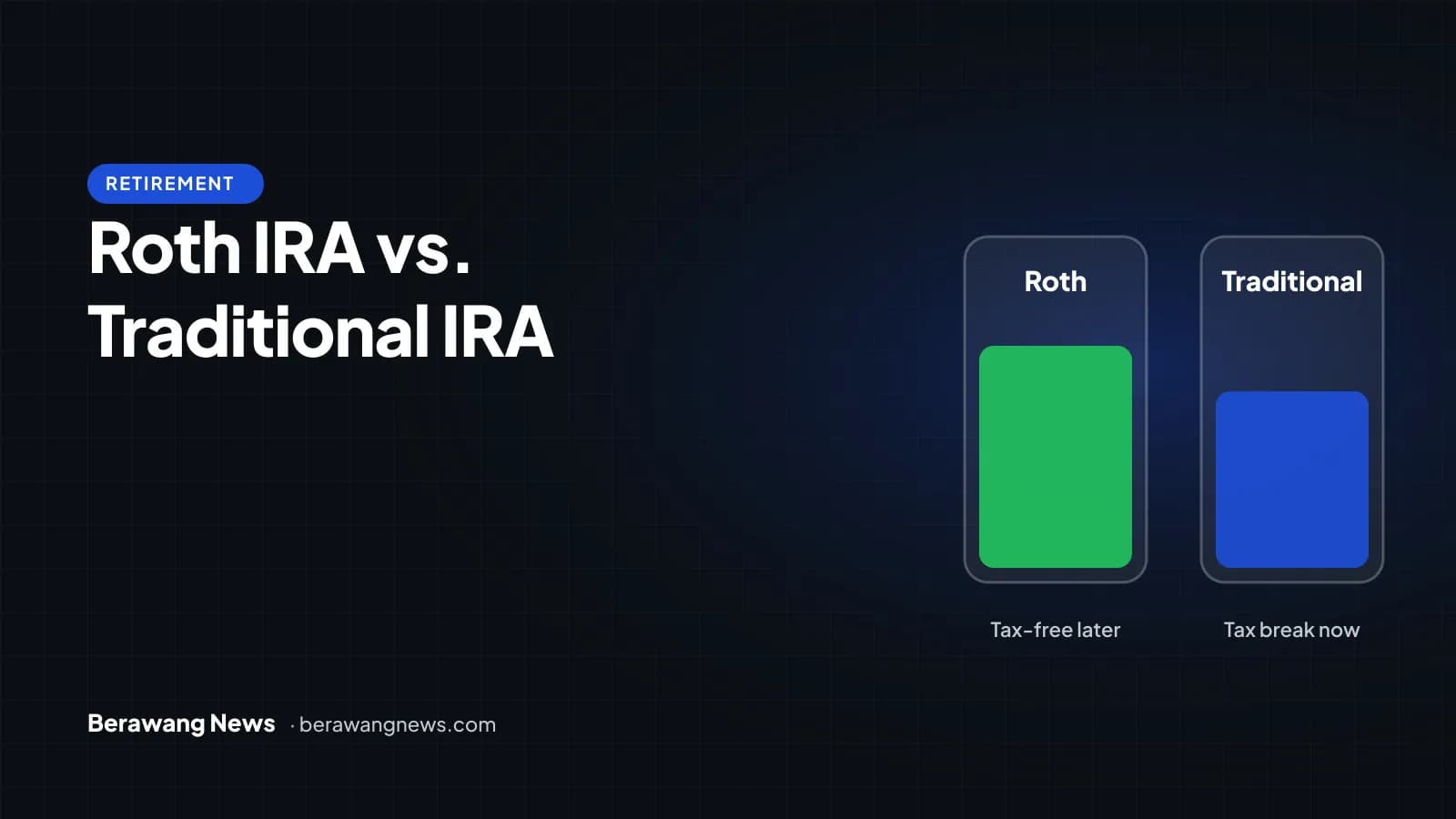
The difference between a Roth IRA and a traditional IRA comes down to when you pay tax. A traditional IRA may give you a tax deduction now, and you pay tax when you withdraw. A Roth IRA gives no deduction now, but qualified withdrawals in retirement are tax-free.
Roth IRA vs. traditional IRA at a glance
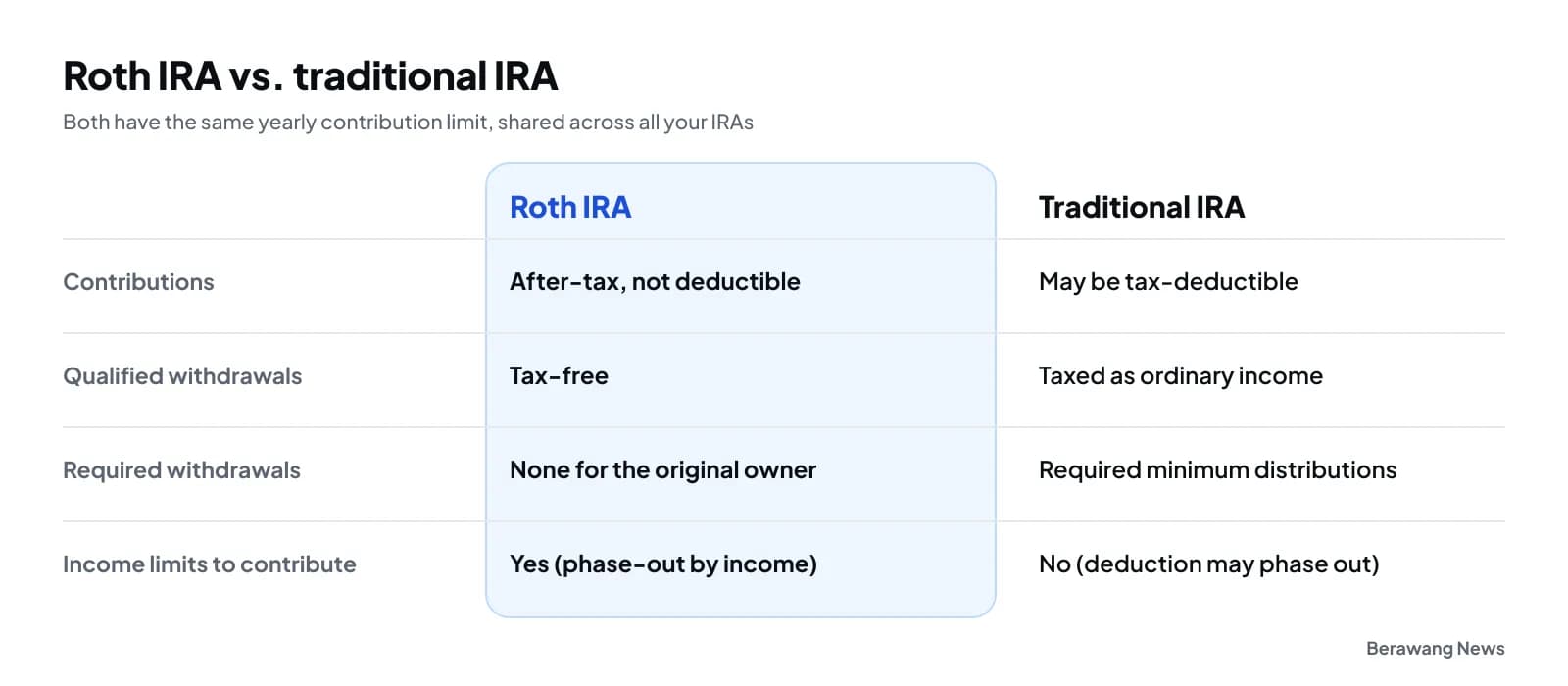
| Roth IRA | Traditional IRA |
|---|---|---|
Tax break | None now; contributions are never deductible | Contributions may be tax-deductible |
Withdrawals in retirement | Tax-free if the distribution is qualified | Taxed as ordinary income |
Required minimum distributions | None while the original owner is alive | Start at age 73 |
Income limit to contribute | Yes, contributions phase out at higher incomes | No, but the deduction can phase out |
2026 IRA contribution limits
For 2026, you can put up to $7,500 into your IRAs, or $8,600 if you are 50 or older ($7,500 plus a $1,100 catch-up). The limit is shared: it is the total across all your traditional and Roth IRAs, not per account. For 2025, the limit was $7,000 plus a $1,000 catch-up.
You need taxable compensation, such as wages, to contribute (or a spouse with compensation if you file jointly). There is no age cap for either type. You can contribute for a tax year until your tax filing deadline, not including extensions.
Roth IRA income limits for 2026
Your ability to contribute to a Roth IRA phases out based on your modified adjusted gross income (MAGI):
Filing status | Phase-out range (2026) |
|---|---|
Single or head of household | $153,000 – $168,000 |
Married filing jointly | $242,000 – $252,000 |
Married filing separately | $0 – $10,000 |
Below the range you can contribute the full amount; above it you can’t contribute to a Roth IRA directly.
Traditional IRA deduction limits for 2026
Anyone with compensation can contribute to a traditional IRA. But if you or your spouse are covered by a retirement plan at work, your deduction phases out at these MAGI levels:
Situation | Phase-out range (2026) |
|---|---|
Single, covered by a workplace plan | $81,000 – $91,000 |
Married filing jointly, you are covered | $129,000 – $149,000 |
Married filing jointly, only your spouse is covered | $242,000 – $252,000 |
Withdrawal rules
- Traditional IRA: withdrawals are taxed as ordinary income. Taking money out before age 59½ generally adds a 10% additional tax, unless an exception applies.
- Roth IRA: a withdrawal is “qualified,” and tax-free, if it comes at least five years after your first Roth contribution year and you are 59½ or older, disabled, or using it for a qualified first-time home purchase (or it is paid after death).
Required minimum distributions (RMDs)
Traditional IRA owners must start taking RMDs at age 73. The first one is due by April 1 of the year after you turn 73. Roth IRAs have no RMDs while the original owner is alive, though beneficiaries who inherit one do.
Which one should you choose?
- A Roth IRA may fit better if you expect to be in the same or a higher tax bracket in retirement, you are early in your career, or you want to avoid RMDs.
- A traditional IRA may fit better if you want to lower your taxable income now and expect a lower tax bracket in retirement.
- You don’t have to pick just one. You can split the yearly limit between both types.
See how steady contributions can grow with our compound interest calculator. Not sure what to buy inside the account? Start with how to start investing in stocks or what an ETF is.
Frequently asked questions
What is the IRA contribution limit for 2026?
$7,500, or $8,600 if you are 50 or older. The limit applies to all your IRAs combined.
Can I have both a Roth IRA and a traditional IRA?
Yes, as long as your total contributions across both stay within the yearly limit.
Can I contribute to a Roth IRA if my income is too high?
Not directly once your MAGI is above the phase-out range for your filing status.
When can I withdraw from a Roth IRA tax-free?
When the distribution is qualified: at least five years after your first Roth contribution year and after age 59½ (or disability, a qualified first-time home purchase, or death).
This guide is for education only and is not tax or investment advice. Limits change each year; check IRS.gov or a tax professional for your situation.
Sources
- IRS: 401(k) limit increases to $24,500 for 2026, IRA limit increases to $7,500 (IR-2025-111)
- IRS: Traditional and Roth IRAs
- IRS: Publication 590-A, Contributions to Individual Retirement Arrangements
- IRS: Publication 590-B, Distributions from Individual Retirement Arrangements
- IRS: Instructions for Form 8606
- IRS: Retirement Plan and IRA Required Minimum Distributions FAQs