What Is an ETF and How Does It Work?
An exchange-traded fund (ETF) pools money to hold many stocks, bonds or other assets, and its shares trade on an exchange throughout the day like a stock.
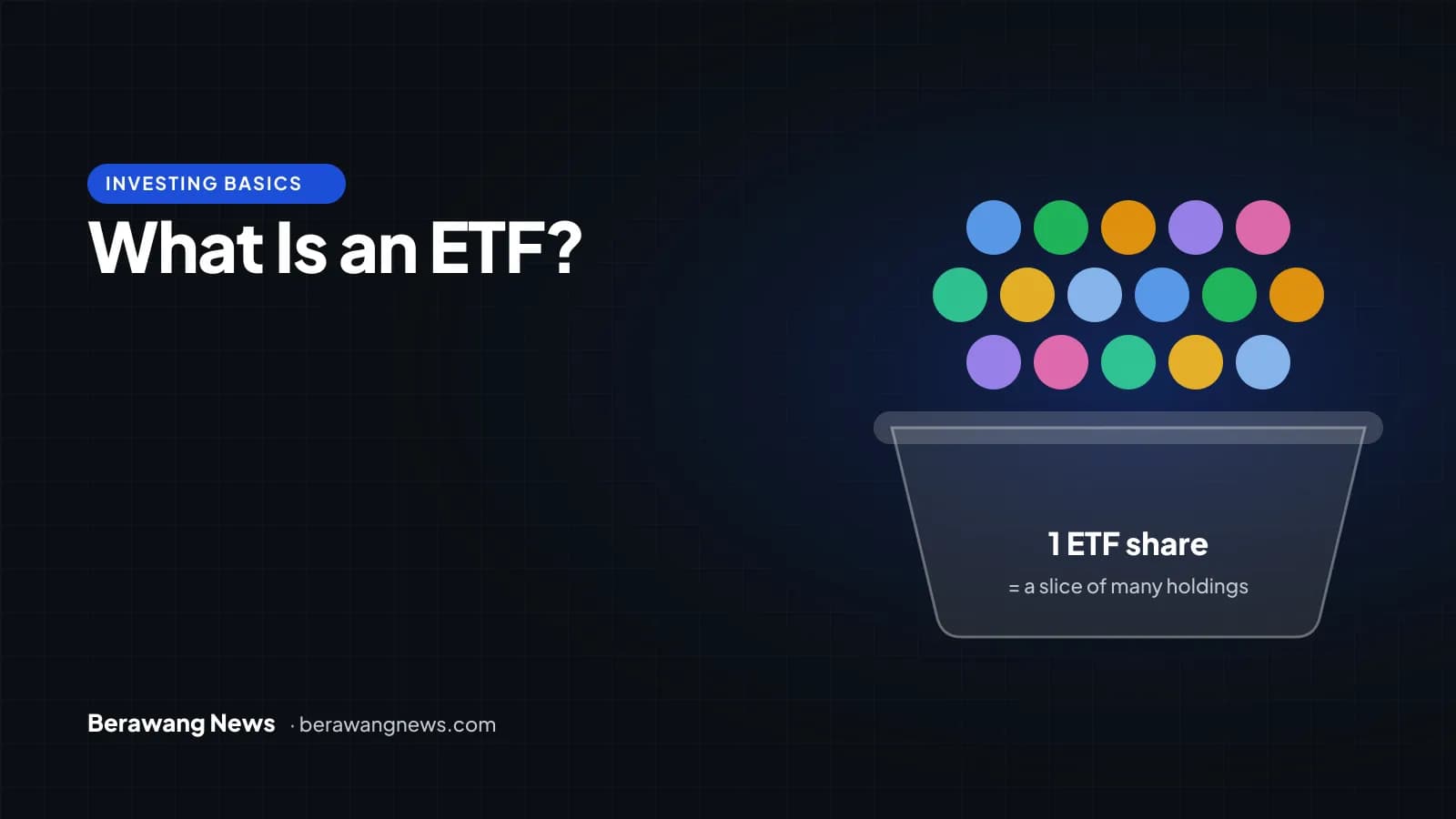
An exchange-traded fund (ETF) is a fund that pools money from many investors to buy a basket of stocks, bonds or other assets. Each ETF share represents a small slice of everything the fund owns, and you buy and sell those shares on a stock exchange throughout the trading day, just like a stock.
How an ETF works
When you buy one share of an ETF, you own a proportional piece of its whole portfolio and the income it earns. An ETF that tracks a broad stock index, for example, can give you exposure to hundreds of companies in one purchase.
ETFs come in two main styles:
- Index ETFs aim to match the performance of a market index.
- Actively managed ETFs have managers who choose investments to try to beat the market or reach a goal.
How ETF shares are priced
An ETF has two prices to know:
- Market price: what you pay or receive when you trade on the exchange. It changes throughout the day.
- Net asset value (NAV): the value of everything the fund holds, divided by its shares, calculated once each business day.
Large financial firms called authorized participants can create or redeem ETF shares directly with the fund, which generally keeps the market price close to the NAV. When an ETF trades above its NAV it is at a premium; below it, at a discount.
What ETFs cost
- Annual fund expenses: every ETF charges yearly operating costs, listed in its prospectus. Lower costs leave more of the return for you.
- Trading costs: your broker may charge a commission.
- Bid-ask spread: the gap between the price buyers offer and sellers ask is a hidden cost each time you trade. It tends to be wider for ETFs that trade less often.
ETFs vs. mutual funds
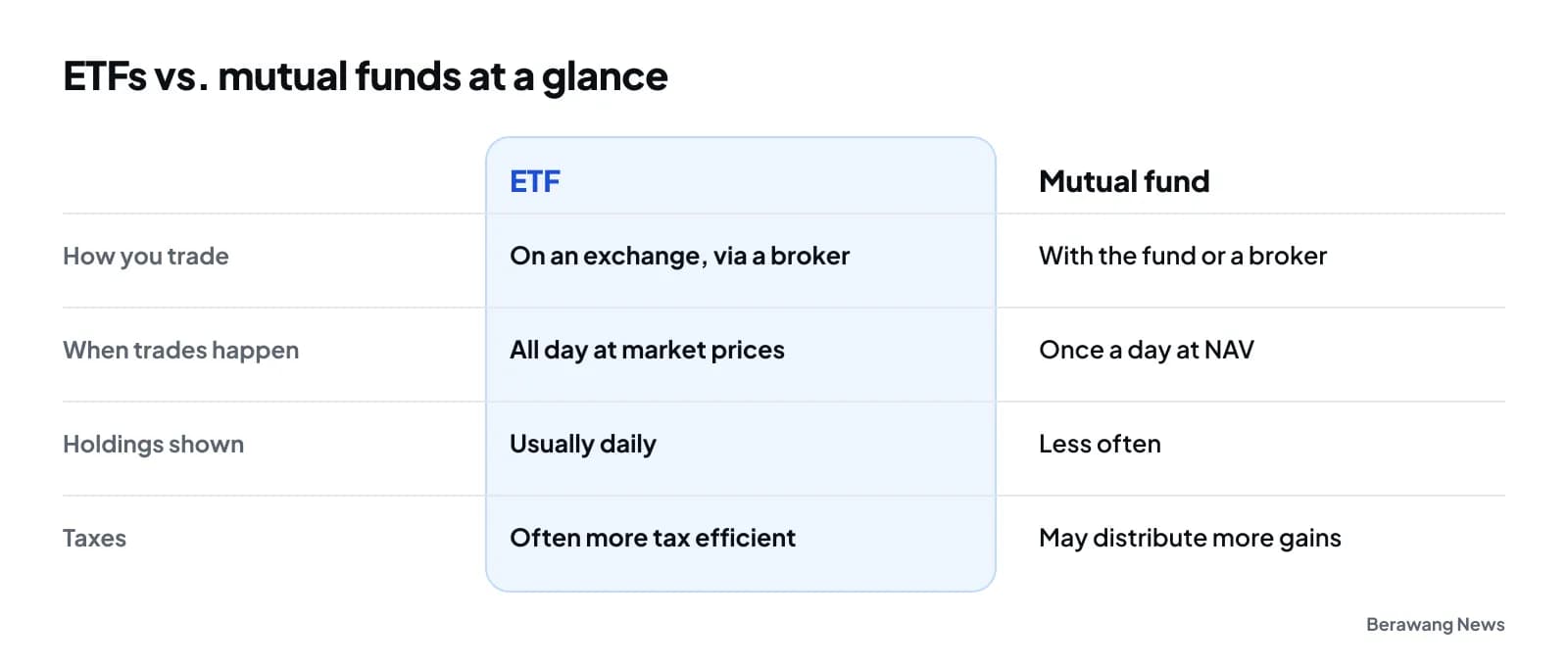
| ETF | Mutual fund |
|---|---|---|
How you buy and sell | On a stock exchange, through a broker | Directly with the fund company or through a broker |
When trades happen | Throughout the trading day at market prices | Once a day, at the NAV calculated after the market closes |
Holdings disclosure | Most ETFs show their holdings daily | Usually disclosed less often |
Taxes | Often more tax efficient, with fewer capital gain distributions | May pass more capital gains to shareholders |
Are ETFs diversified?
A broad index ETF can spread your money across many companies, which reduces the risk of any one company hurting your whole investment. But an ETF that focuses on a single industry or theme is not automatically diversified. Always check the fund’s top holdings before you buy.
New to investing? Start with our guide on how to start investing in stocks.
Risks to know before buying an ETF
- Market risk: the ETF rises and falls with the assets it holds, and you can lose money.
- Price vs. value: you may pay more or less than the fund’s underlying assets are worth (premium or discount).
- Spreads: wider bid-ask spreads reduce your return, especially for thinly traded ETFs.
- Complex products: leveraged and inverse ETFs are designed for short-term trading and can behave very differently from what long-term investors expect.
How to buy an ETF
- Open a brokerage account and add money.
- Search for the ETF by its ticker symbol.
- Read the fund’s prospectus or fact sheet: holdings, annual expenses and strategy.
- Place an order during market hours. A limit order lets you control the price you pay.
Frequently asked questions
Is an ETF the same as a stock?
No. An ETF trades like a stock, but each share represents a slice of a whole portfolio rather than one company.
Are ETFs good for beginners?
Broad, low-cost index ETFs are a common way for beginners to diversify, but every ETF carries investment risk.
Do ETFs pay dividends?
Many ETFs that hold dividend-paying stocks pass those dividends on to shareholders. Estimate income with our dividend calculator.
What is the difference between an ETF and an index fund?
“Index fund” describes a strategy of tracking an index. Many ETFs are index funds, and index funds can also be mutual funds.
This guide is for education only and is not investment advice. Read a fund’s prospectus before investing.