FICO Stock Falls as Company Skips Fiscal 2027 Guidance
Fair Isaac's fiscal Q4 revenue rose 27% to $657 million, but the FICO score maker gave no fiscal 2027 outlook, and shares fell in premarket trading.
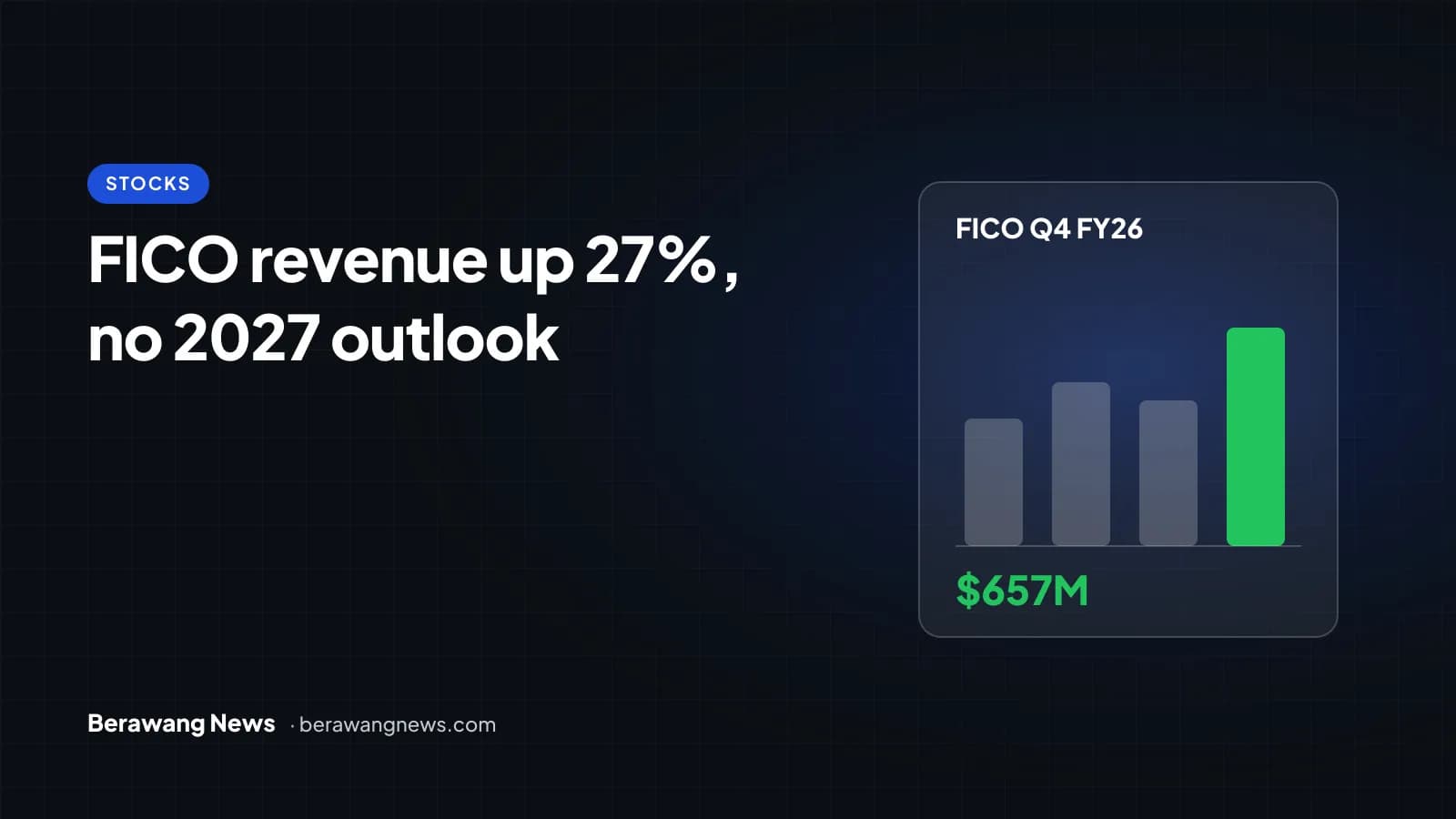
Fair Isaac, the company behind the FICO credit score, said on Wednesday, November 4, 2026, that revenue for its fiscal fourth quarter rose 27% to $657.0 million. But it declined to give a forecast for fiscal 2027, and its shares fell 9% in premarket trading on Thursday, November 5, according to Reuters.
The numbers
Measure | Q4 FY2026 | Q4 FY2025 |
|---|---|---|
Revenue | $657.0 million | $515.8 million |
GAAP net income | $175.0 million | $155.0 million |
GAAP diluted EPS | $8.12 | $6.42 |
Non-GAAP diluted EPS | $11.10 | $7.74 |
Free cash flow | $284.3 million | $210.8 million |
Source: Fair Isaac's earnings release for the quarter ended September 30, 2026, filed with the SEC.
For the full fiscal year, revenue was $2.53 billion, up from $1.99 billion, and GAAP diluted EPS was $36.32, up from $26.54. The company spent about $3.05 billion buying back its own stock during the year.
Adjusted EPS of $11.10 beat a consensus of $10.86, while revenue came in slightly below expectations, according to TradingKey.
Scores drove the growth
FICO has two businesses. Scores, which includes the credit scores lenders buy, brought in $413.8 million, up 33%. Within that, business-to-business scores rose 39%, which the company tied mainly to a higher price per mortgage origination score, partly offset by fewer mortgages being written. Software revenue rose 19% to $243.2 million, and the company said annual recurring revenue on its platform software rose 72%.
Why the stock fell
The missing outlook is the main story. FICO said it is moving to "bespoke mortgage originations pricing," including a program it calls the FICO Preferred Program, and that mortgage originations remain below historical norms because of elevated interest rates and affordability problems. "Because of these factors, we are not providing fiscal year 2027 guidance at this time," the release said.
The quarter also included three one-time items: a $65 million accrual for a proposed settlement of antitrust class action lawsuits tied to the Scores business, a $27 million restructuring charge for a planned workforce reduction, and a $48 million gain from selling a minority equity investment. The company did not say in the release how many jobs will be cut.
What it means for investors
Most of FICO's recent growth has come from charging more for each mortgage score, not from selling more of them. When a company that relies on pricing power stops giving guidance during a pricing change, investors lose a key anchor for valuing the shares, and that uncertainty often shows up in the stock price first. Notice also the gap between GAAP EPS ($8.12) and adjusted EPS ($11.10): the one-time items above explain much of it. Our guide on how to read an earnings report walks through GAAP versus adjusted numbers, and stock market hours explains why premarket moves can change by the open. For other reports this week, see AppLovin's third quarter.
This article is for information only and is not investment advice.
Sources
- Fair Isaac: Fourth quarter fiscal 2026 results (Form 8-K, Exhibit 99.1, November 4, 2026)
- Fair Isaac: Form 8-K cover, November 4, 2026
- Reuters via Yahoo Finance: S&P 500 futures steady after midterm rally; Nasdaq lags on chip weakness (November 5, 2026)
- TradingKey: US pre-market report, November 5, 2026
This article is for information only and is not investment advice. Do your own research before buying or selling any asset.