Types of Stock Orders: Market, Limit, Stop and Stop-Limit
The order type you choose decides how and at what price your trade happens. Learn market, limit, stop, stop-limit and trailing stop orders, plus day vs. good-til-canceled.
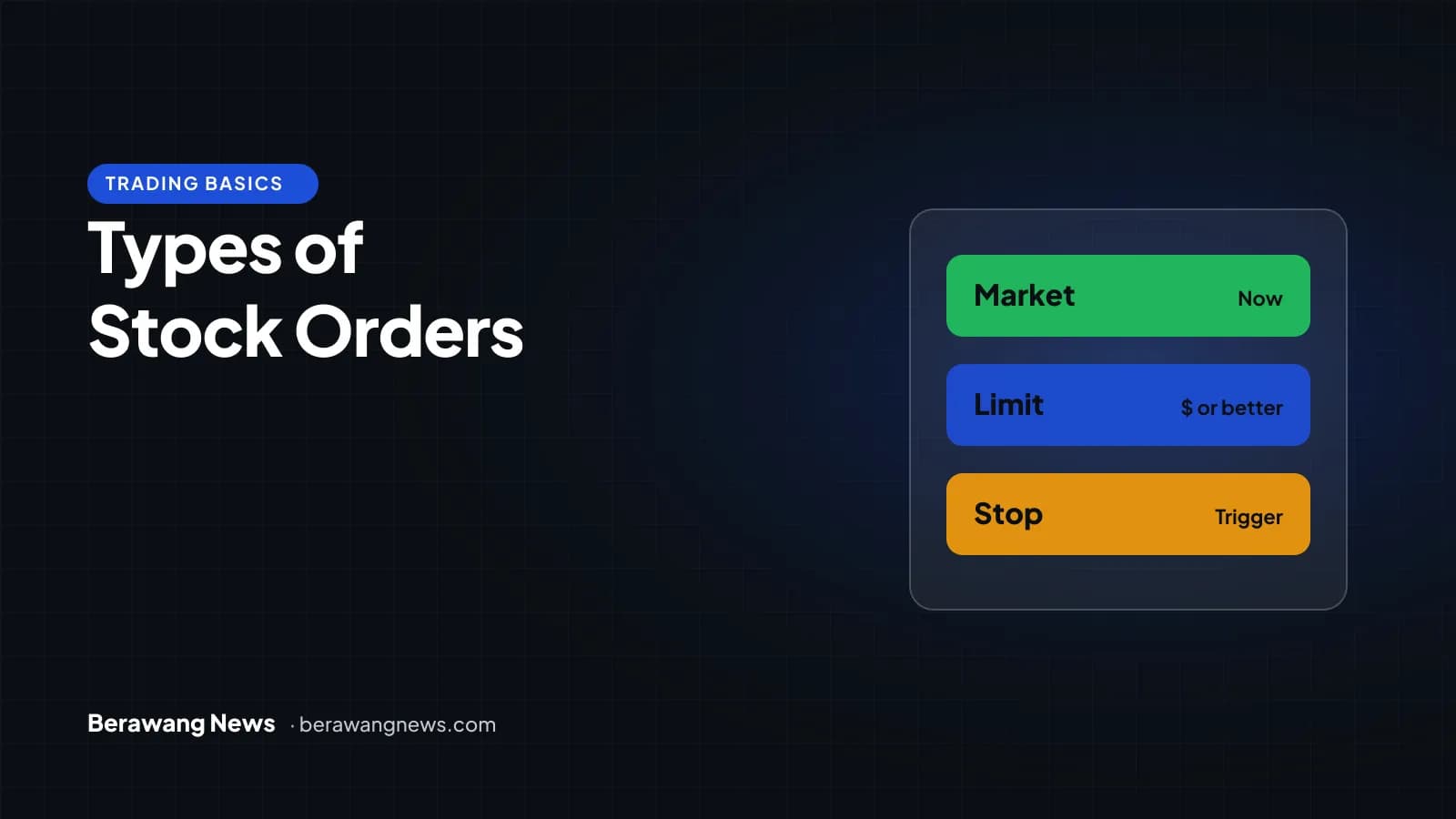
When you buy or sell a stock, you don’t just pick the stock and the number of shares. You also choose an order type, which tells your broker how to carry out the trade. The right choice can protect you from paying more than you meant to, or from selling at a much lower price than you expected.
Market order
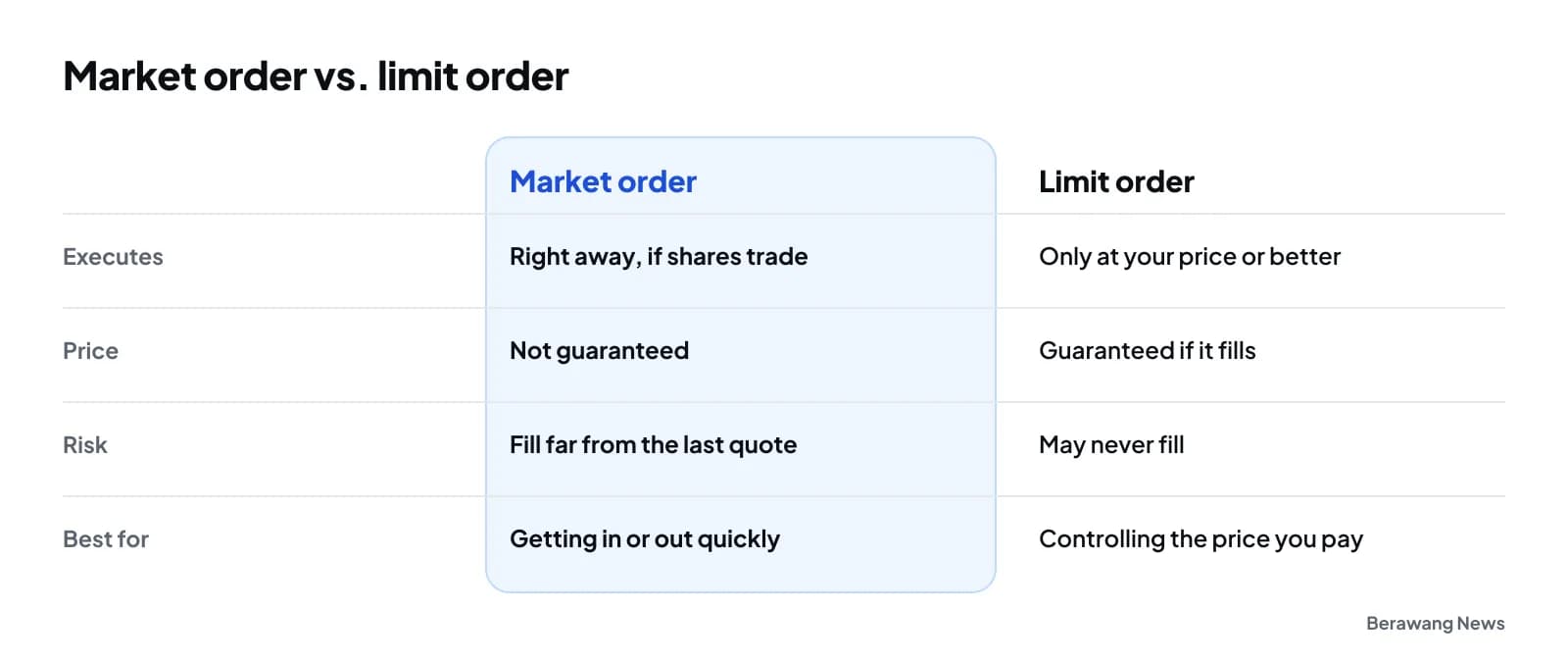
A market order buys or sells right away at the best available price.
- Pro: it is almost always executed, as long as the stock is trading.
- Con: the price is not guaranteed. The last-traded price you see is not necessarily the price you’ll get, and FINRA notes you might not get the quoted price, especially in fast-moving markets.
Buy orders generally fill near the ask and sell orders near the bid; see how to read a stock quote.
Limit order
A limit order buys or sells at a specific price or better. A buy limit order fills only at your limit price or lower; a sell limit order only at your limit price or higher.
- Pro: you control the price.
- Con: it is not guaranteed to execute. If the stock never reaches your price, nothing happens.
Stop order (stop-loss)
A stop order waits until the stock hits a price you choose, the stop price. Then it becomes a market order.
Investors often use a sell stop below the current price to limit losses. But be aware:
- The stop price is not a guaranteed execution price. Once triggered, the order can fill significantly below your stop in a fast-falling market.
- A brief, short-term price swing can trigger your stop even if the stock recovers minutes later.
Stop-limit order
A stop-limit order becomes a limit order once the stop price is reached, so it fills only at your limit price or better.
- Pro: protects you from a fill far below your stop.
- Con: if the price moves past your limit quickly, the order may not execute at all, leaving you holding a falling stock.
Trailing stop order
A trailing stop sets the stop price as an amount or percentage below the market price instead of a fixed number. As the stock rises, the stop rises with it; if the stock falls by your set amount, the order triggers.
How long your order lasts
Duration | What happens |
|---|---|
Day order | Cancels at the end of regular trading hours if not filled; doesn’t carry over to after-hours or the next day |
Good-til-canceled (GTC) | Stays open until it fills or you cancel it; brokers set their own maximum time limits |
Most orders fill during regular stock market hours. Extended-hours trading often has fewer buyers and sellers and wider spreads, so limit orders are usually required.
Which order should you use?
- Long-term investor buying a large, heavily traded stock or ETF: a market order is usually fine during regular hours, but a limit order adds price protection at little cost.
- Thinly traded stocks, volatile markets or extended hours: use a limit order.
- Protecting a gain or limiting a loss: consider a stop or stop-limit order, knowing their trade-offs.
If you are averaging into a position over time, our average stock price calculator shows your average cost per share.
Frequently asked questions
What is the safest order type?
A limit order gives the most price control, but it may not fill. No order type removes the risk of a falling price.
Why didn’t my limit order fill?
The stock never traded at your limit price or better, or there weren’t enough shares available at that price before your order expired.
Can a stop-loss order fail to protect me?
Yes. A stop order turns into a market order and can fill well below your stop price in a fast drop. A stop-limit order might not fill at all.
What is the difference between a day order and GTC?
A day order expires at the end of the regular trading day. A good-til-canceled order stays open until it fills or you cancel it, within your broker’s time limit.
This guide is for education only and is not investment advice.