Daftar Isi
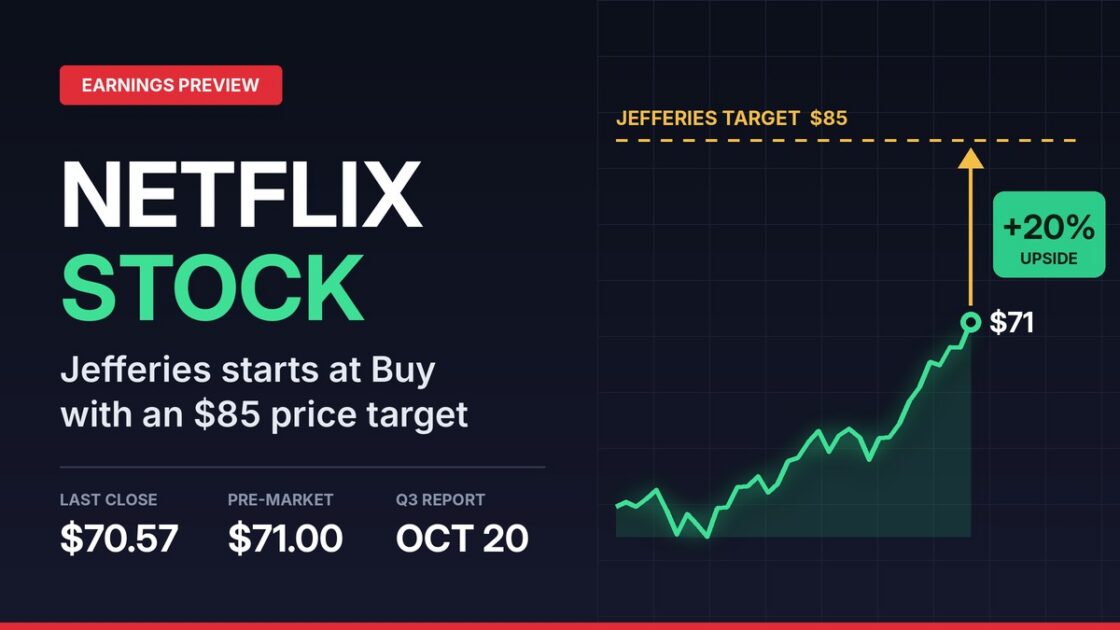
Jefferies has started covering Netflix with a Buy rating and an $85 price target, giving Netflix stock a vote of confidence just days before the streaming company reports third-quarter results on October 20. The firm’s case rests on three levers: higher subscription prices, a fast-growing advertising business, and widening operating margins.
The target sits about 20% above the stock’s last close of $70.57. Shares added 0.62% in pre-market trading after the call, building on a 0.16% gain in the prior session and lifting the price to $71 before the opening bell.
The timing matters. Earnings reports tend to reset how investors value a company, and Jefferies is betting that Netflix can keep turning its global audience into steadily rising profits. Next week’s numbers will be the first real test of that view.
What Jefferies Expects From Netflix
Analyst John Colantuoni projects that Netflix can grow earnings per share by more than 14% a year over the next decade. That is a long runway for a company already among the largest players in streaming, and it depends on Netflix earning more from each member rather than relying only on adding new ones.
According to Colantuoni, revenue per member should rise by roughly 6% a year. That would account for more than half of the 11% annual revenue growth he forecasts for 2026 through 2029.
| Jefferies projection | Figure |
|---|---|
| Rating | Buy |
| Price target | $85 |
| Implied upside from $70.57 close | About 20% |
| Annual EPS growth, next decade | More than 14% |
| Annual revenue growth, 2026 to 2029 | About 11% |
| Annual revenue-per-member growth | About 6% |
| Annual advertising revenue growth | About 35% |
Pricing power still has room
Colantuoni’s pricing argument is built on value per viewing hour. He estimates that Netflix’s standard U.S. plan currently costs about 60% less than competing services when measured against how much time people actually spend watching. If Netflix raises prices by around 7% a year, he expects that discount to shrink to about 50% by 2029.
The reasoning is straightforward. Subscribers who watch heavily may tolerate price increases more readily when the service still looks cheap relative to rivals on a per-hour basis.
Advertising as a second growth engine
The bigger swing factor may be advertising. Colantuoni forecasts ad revenue growing about 35% a year, driven by more subscribers on ad-supported plans, heavier ad loads, rising demand from third-party advertisers, and new ad formats.
How the ad business got here
Netflix introduced its lower-priced, ad-supported tier in November 2022, a sharp reversal for a company that had long resisted commercials. The tier gave Netflix a cheaper entry point for price-sensitive viewers and a second stream of revenue from each of those accounts, which is the foundation Jefferies now sees compounding.
Not Every Analyst Is Raising the Bar
Wall Street sentiment heading into the report is broadly positive, but some firms are tempering their profit expectations. KeyBanc recently cut its Netflix price target to $85, pointing to foreign-exchange headwinds and a slower pace of operating-margin improvement as Netflix keeps spending heavily on content. The firm kept its Overweight rating.
The overlap is worth noting. Jefferies and KeyBanc now land on the same $85 target, but one arrived there by initiating with optimism while the other trimmed from a higher level. That split captures the central question for Netflix stock: whether monetization gains can outrun the costs of content and currency swings.
Why per-share figures look different now
Investors comparing today’s $70 to $85 range with older headlines should keep in mind that Netflix carried out a 10-for-1 stock split in November 2025. Price targets and share prices from before that date are roughly ten times higher and are not directly comparable.
What to Watch on October 20
When Netflix reports, the market is likely to focus on four areas that map directly onto the Jefferies thesis:
- Advertising revenue growth, the clearest check on the 35% forecast
- Pricing and revenue per member, which shows whether recent price increases are sticking
- Operating margin, especially against KeyBanc’s warning about content spending
- Subscriber and engagement trends, as a gauge of how much room remains for growth
Netflix stopped reporting quarterly subscriber counts beginning in 2025, shifting attention toward revenue, margins, and engagement. That makes the financial metrics above even more central to how the quarter will be judged.
A strong showing on ads and margins would support the bullish case laid out by Jefferies. A miss on either, or a cautious outlook tied to currency pressure, could give more weight to the restraint shown by firms like KeyBanc.
Disclaimer: This content was partially produced with the help of AI tools and This content is for informational purposes only and not investment advice.